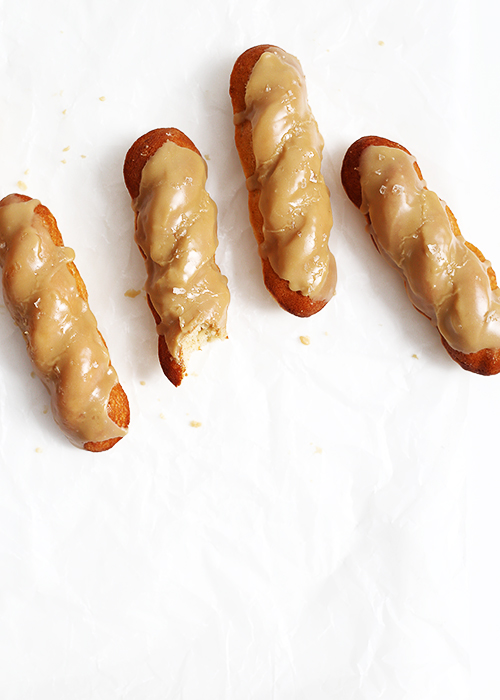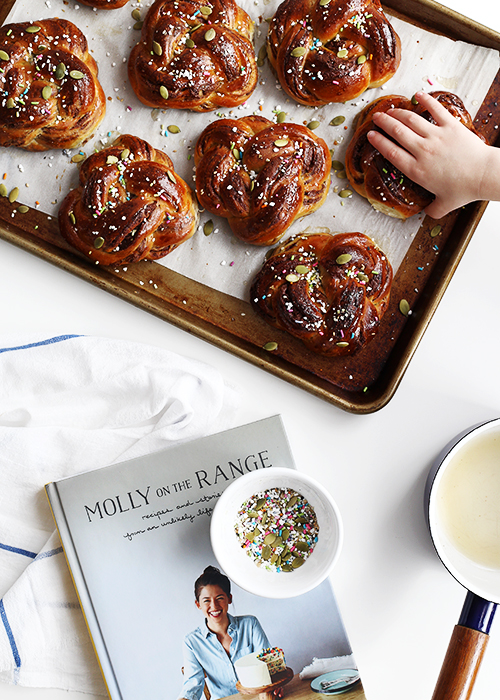
Today marked the start of the farmer’s market season in Oak Park. I’ve been looking forward to this day for weeks. I even popped out of bet a little earlier—with excitement. And the weather was just perfect for a walk. My graduate school husband got a couple homemade donuts—while I got some asparagus, rhubarb, and black raspberry jam. Perfect Saturday morning.

We love asparagus minus it’s after effects, if you know what I mean. It is super easy to cook. Very versatile. With a quick 10 minute cook time. You’re gonna love this recipe, if you can even call it that.

Asparagus

Bunch of fresh asparagus spears (support your local farmers!)
Drizzle of olive oil
Sprinkle of sea salt

1. Preheat oven to 425°.
2. Wash and dry asparagus. Break off hard woody ends.
3. Place on baking sheet covered with foil for easy clean up.
4. Drizzle with olive oil, and sprinkle with sea salt.
5. Bake for 10 minutes. Enjoy.

TIPS
• This recipe is so basic, it’s easy to dress up. Try adding lemon or orange zest, lemon juice, orange slices, garlic slices, balsamic vinegar, or parmesan cheese.
• If you overcook your asparagus, they will no longer be spear-like, but limp and soggy and a little less nutritious. 

PS—Do you notice anything different around here? The ole blog was in need of an update. I’m trying to do it myself with the little web knowledge that I have—scary! If only it was as easy as cooking asparagus.

Green is my favorite color. And I was hell-bent on having it in our tiny little kitchen, the room where all the magic happens. Two different gallons of green paint later, and it just wasn’t working with the other colors going on in the kitchen. However, for the sake of our wallet, we kept the green. But I’m happy to report—my three year affair with green has passed. On a whim, we painted it grey. And we love it. I think we’re growing up.

What color is your kitchen? Do you love it? Hate it?

Finally, it’s that season again. I think. We had a horribly long winter in Chicago. And spring has been anything but spring. Depending on the day, it’s felt more like winter, summer, and fall. We were supposed to go camping this weekend, but the cold rainy weather kept us away. Saturday night, when I should have been roasting marshmallows, I tried to will the weather warmer by making burgers on the indoor grill. According to the 5-day forecast, it’s working!

And you can’t have burgers without buns. Homemade brioche buns. I score big points with the husband when I make these. He just loves em. Here’s the problem, though—I never give myself enough time to let them rise. It was no different this time. But I did a little research and have some tips for all the procrastinators out there like me.

Brioche Burger Buns
recipe adapted from Smitten Kitchen; makes 8

1 c. warm water
3 tbsp. warm milk
2 tsp. active dry yeast
2 1/2 tbsp. sugar
2 large eggs, divided
2  3/4 c. unbleached AP flour
1/3 c. potato starch
1 1/2 tsp. salt
2 1/2 tbsp. unsalted butter, melted
Sesame seeds

1. In a glass measuring cup, combine warm water, yeast, and sugar. (The liquid should be between 110º-115º for the yeast to proof properly. Interesting fact—sugar helps the proofing process.)  Allow yeast to proof until foamy, about five minutes.
2. Melt butter. Whisk in one egg and warmed milk. Set aside.
2. In a large bowl, whisk together flour, potato starch, and salt. Add melted butter and yeast mixture into the flour, stirring until a dough forms. Knead dough well for about 8 minutes. To avoid less mess, knead in the same bowl. Dough should be on the sticky side. If dough is too wet, add 1 tablespoon flour at a time. Keep in mind—the more flour you knead into the dough, the tougher the buns.
3. Shape dough into a ball. Cover bowl with towel. Let rise in a warm place until doubled in bulk, two hours. (For the procrastinators, speed up the rising time by preheating oven to 350º for 1 minute. Turn off and place bowl in warm oven, about 1 hour.)
4. Line baking sheet with parchment paper or Silpat. Divide dough into 8 equal parts. Gently roll each into a ball and place two to three inches apart on baking sheet. Cover loosely with towel, and let buns rise in a warm place for two hours. (Or, use the procrastinator technique.)
5. Set a large shallow pan of water on oven floor. This will help steam the buns. Preheat oven to 400º with rack in center. Beat remaining egg, and brush tops of buns. Sprinkle with sesame seeds. Bake until tops are golden brown, 12-15 minutes. Transfer to rack and cool completely.

TIPS
• Leary about working with yeast? Check this how-to video out.
• Substitute in some wheat flour if you wish, using a tad bit less to compensate its density. 

• Have leftover buns? No problem. Stick them in a freezer safe bag. Make sure all the air is out. When you’re ready to use, take them out, wrap them in a damp paper towel, and, using the defrost setting on your microwave, defrost for no more than 5 minutes. They should be soft, warm, and ready to eat!

Buns—bring on the warmer weather, please.

Every Wednesday at work, we have break. It’s exactly like it sounds—a break from work. But it gets better. We eat. You could probably say it’s my favorite day of the work week. Never, no never, do I plan a meeting during this time. It’s a sin. 10 am is reserved for break and break alone.

We take turns providing food. You only have to do it a couple times a year. I’d sign up every week if I could, but I’d go broke! So last week it was my turn along with my coworkers Ruby and Danielle. Ruby had the great idea of doing a bake sale. So cute! We each made baked goods. Danielle brought the world’s best Date Balls. I don’t even like dates, and I loooveed these little gems. Ruby brought chocolate chip cookie bars and chocolate cookies. Also delish! And I brought mini brownies and vanilla cupcakes. (PS—If you make these mini style, reduce the baking time immensely. Bake for about 12-15 min.)

The ideas kept on flowing. Ruby came up with prices for the baked goods like—3 shimmies or 4 girl push-ups or 2 karate chops (we work at a non-profit). She also had the cute idea of packaging the food and creating sticker labels. Sign me up! I love designing for food. If I could design for bakeries all day, I’d be in heaven. The only thing better would be working in a bakery all day. A couple clicks and light bulbs later, the Bake Sale became the Break Sale. And we were in business.

Now, if we could only make money.

We celebrated my husband’s birthday last weekend. We’re now closer to 30 than 20. Kind of weird. In normal fashion, I asked him what kind of cake he wanted. Without hesitation, he said Lemon Raspberry Cake.

I was so excited he knew what he wanted, I made the cake without hesitation hoping he wouldn’t change his mind. As I was putting the final touches on the cake, I realized something. The cake was pink. Pale pink. I had just made my husband a pale pink birthday cake. I never considered that raspberry icing would produce a pink cake. Happy birthday little girl husband!

Luckily, he ate it in all it’s pale pink glory. I guess I could have done raspberry on the inside and lemon on the outside. The scarecrow said it best—If I only had a brain.

Speaking of lemon, this graced the inside of the cake.

Between all four layers.

Mini Lemon Raspberry Cake
Yellow Butter Cake + Lemon Curd + Raspberry Italian Meringue Buttercream

Yellow Butter Cake
I halved the Yellow Butter Cake recipe from a couple posts back. Bake in a square pan. Follow recipe as directed. Check cake at 20 minutes. Allow to cool. Cut cake into fourths to achieve mini square cake as pictured.

Lemon Curd
recipe from Cake Love by Warren Brown; yields 2 cups

1 c. fresh squeezed lemon juice
2 1/4 c. sugar
2 tsp. cornstarch
4 large eggs
4 egg yolks
1 1/2 sticks unsalted butter, chilled

1. Squeeze lemon juice making sure to strain out seeds. Measure sugar and cornstarch into a heavy bottomed saucepan. (I use my Le Creuset for this.) Crack eggs and yolks into a separate bowl and set aside.
2. Whisk lemon juice into sugar mixture, followed by the eggs and yolks.
3. Whisk in cold butter one tablespoon at a time.
4. Set saucepan over medium heat and bring to simmer, whisking continuously.
5. When you begin to see lava bubbles—large, slowly forming bubbles that burp steam—reduce the heat to the lowest setting and whisk briskly for 1 minute to pasteurize the lemon curd. (Lava bubbles usually appear 10 minutes in.)
6. Pour directly into bowl, and cover with plastic wrap pressed to surface to keep a skin from forming.
7. Immediately refrigerate for at least 3 hours before using.
Note: I halved the recipe for the mini cake. 

Raspberry Italian Meringue Buttercream
I halved the Italian Meringue Buttercream recipe from a couple posts back and added raspberries. Make recipe as directed. If you are making a full recipe, you’ll need 1/2 c. raspberries. If you are making a half recipe, you’ll need 1/4 c. raspberries. Puree raspberries in food processor. Using a fine mesh sieve, strain the puree into a bowl to remove seeds. Add puree to buttercream and whip until combined.

Ice the Cake
For a quick tutorial, click here. Serve cake at room temperature.

Can I let you in on a little secret? I wanted to show you a slice of the cake, but I wasn’t serving the cake until later that evening. So, I cut the cake. Took some pics. And put the cake back together. The Italian Meringue Buttercream is very forgiving like that.

Still pink, but good as new!

I make one brownie recipe. It’s from the Martha Stewart’s Baking Handbook. It’s so good, I haven’t felt the need to try any other recipes out there. These brownies make an appearance in the annual Christmas in a Bowl. They are fudge-y as opposed to cake-y. They are dark chocolate as opposed to milk chocolate. They are salty as opposed to sweet. Ha! Just kidding. However, they do have a hint of sea salt that makes them taste all the more sweeter. (Did you know that adding salt not only compliments but brings out the sweetness? It’s my favorite ingredient in baking.)

Go ahead. Give it a try. It may end your brownie search. Did I mention, they are super easy to make? One bowl? Quick clean-up. Are you convinced now?

Brownies
recipe from Martha Stewart’s Baking Handbook

1/2 c. (1 stick) unsalted butter
8 oz. bittersweet chocolate, coarsely chopped
1 1/2 c. sugar
4 large eggs
1 tsp. pure vanilla extract
3/4 c. all-purpose
1/2 tsp. salt (I use sea salt. If using, you don’t need the full 1/2 tsp.)

1. Preheat oven to 350°. Line an 8-inch square baking pan or heatproof glass dishpan with parchment paper, leaving a 1-inch overhang on 2 sides. (I use 2 sheets of parchment paper, setting them perpendicular to one another in the pan. This makes for nice corners on the brownies.) Set aside.
2. Place butter and chocolate in a large heatproof bowl set over, but not touching, simmering water. (I use this double boiler. It also serves as my one mixing bowl for this recipe. Totally worth the investment, especially after you start making these all the time.) Stir frequently until chocolate and butter are melted, about 7 minutes. Remove bowl from heat; let cool to room temperature, 10 to 15 minutes.
3. Stir sugar into cooled chocolate mixture until combined. Whisk in eggs one at a time, whisking until smooth after each addition. Whisk in vanilla. (I use a spatula. Works better than a whisk with batter this thick, in my opinion.) Gently fold in flour and sea salt.
4. Pour batter into prepared pan, and smooth top with an offset spatula. Bake until cake tester inserted in the center comes out with only a few moist crumbs attached, 40 to 45 minutes. (These will be fudge-y!)
5. Using parchment, lift brownies out of pan and onto a wire rack to cool completely.

TIPS
• Let the brownies cool for well over an hour—I’d recommend 3 hours. They are really hard to cut right out of the oven because they are so gooey. Be patient. You will be rewarded.  
• You may have to rinse your knife clean midway through cutting. This will make cutting the other half easier. The yummy brownie goo on the knife can make cutting difficult.
• Looking for more chocolate? Add 1/4 c. semi-sweet or dark chocolate chips into batter. Don’t melt. 
• I typically use Ghirardelli chocolate. Use the best you can find or afford. 
• Wondering why they are so gooey? There is no leavener in this recipe, i.e. baking powder or baking soda. That’s the difference between a cake-y brownie and a fudge-y brownie.  

What’s your go-to brownie recipe?

Vanilla Cake + Pastry Cream + Italian Meringue Buttercream = Very Vanilla Cake. I’m in love.

This cake will please the pickiest of palettes—it’s vanilla, right? But don’t call it boring. It’s so rich, so good, and so sinful. And, might I add, so worth the calories.

This was only my second time to make Italian Meringue Buttercream. However, this will be gracing the outside of many more cakes to come. It is TO DIE FOR. Definitely not as easy to make as your traditional buttercream, but it’s worth the time and technique. Trust me.

Speaking of technique. A couple years back, my graduate school husband used to work Saturdays. I absolutely hated being home alone (I’m a big time extrovert), so I kept myself very busy cooking and baking all day. Sometimes I would try new recipes just to see if I could do it, with no real intentions of actually eating it. One Saturday I set out to make Italian Meringue Buttercream. It looked challenging enough. So I got out my candy thermometer. Made the meringue. Made the “candy.” Added the butter. Whip, whip, whip. And viola—buttercream success! Since I hadn’t made a cake and had no intention of doing so, there was no reason to save the icing. However, graduate school husband does not like to throw anything out. We are after all on a graduate school budget. With plenty of time to spare before he got home, I began feeding the trashcan. And then I heard, “Surprise, I’m home early!” I was caught. Red handed. Feeding the trashcan perfectly good buttercream. Note to self—it is not a good idea to practice techniques and then throw away the perfectly good end product, especially on a graduate school budget.

Moreover, why would I ever toss something so delish? I will never throw out Italian Meringue Buttercream again. Sorry trashcan. It’s just too dang good.

The recipe behind the cake and buttercream is from my favorite, Warren Brown. Pinky promise, I will only make cakes from Warren’s recipes from here on out. They are the best. He has an app too with recipes included! Don’t wait. Download it now. If you plan on making this cake, I recommend making the pastry cream first. Then the cake. When the cake has cooled and you’re ready to ice, make the buttercream. Stay tuned below for decorating tips.

Yellow Butter Cake
recipe from Cake Love by Warren Brown; 2 9-inch round cakes or 24 cupcakes

DRY
1 1/4 c. unbleached AP flour
1/4 c. + 1 tbsp. potato starch (I use Bob’s Red Mill)
1 1/2 tsp. baking powder
1 tsp. salt

LIQUID
1 c. half and half
1 tbsp. vanilla extract

CREAMING
1 1/2 sticks unsalted butter, room temp
1 3/4 c. extra-fine granulated sugar (I food process my regular sugar)
4 large eggs

1. Preheat oven to 350º. Set rack in the middle of the oven.
2. Set out ingredients and equipment. Sift flour. Measure dry ingredients into separate mixing bowl. Add flour and whisk together. Measure liquid ingredients into a separate bowl and set aside. Place butter and sugar in bowl of standing mixer. Crack eggs into a separate bowl and set aside.
3. In the bowl of a standing mixer fitted with paddle attachment, cream together the butter and sugar on the lowest speed for 3-5 minutes. (This will feel odd, but keep it on low.)
4. With the mixer still on the lowest speed, add the eggs one at a time, fully incorporating after each addition. Stop the mixer and scrape down the sides of the bowl.
5. Add the dry ingredient mixture alternately with the liquid mixture in 3 to 5 additions each, beginning and ending with the dry mixture. Move swiftly through the step to avoid overworking the batter. Don’t wait for the dry or liquid mixtures to be fully incorporated before adding the next. This step should take a total of about 60 seconds.
6. Stop the mixer and scrape the sides of the bowl all the way down. Don’t miss the clumps of ingredients hiding on the bottom. Mix on medium speed for 15 to 20 seconds to develop the batter’s structure.
7. Prepare the pans. For 9-inch round cakes, line the bottom of each pan with parchment paper. Do not spray the sides of the pan. (This helps to keep your cakes from doming in the middle. Your cake is able to crawl up the side as it bakes and maintain an even shape.) For cupcakes, line the pan with paper liners.
8. Distribute batter evenly in cake pans or fill cupcake liners with 2-ounce trigger release ice-cream scoop. (I also use the trigger release ice-cream scoop for the cake pans to make sure I have an even amount of batter.) For the cakes, bake for 28 minutes. For the cupcakes, bake for 22 minutes.
9. Once the top of the cake doesn’t jiggle in the center, test for doneness by inserting a toothpick into the middle of the cake. The center should be an even blonde color and the edges should be just beginning to pull away from the pan. When the skewer shows a touch of crumbs or comes out clean, the cake is done.
10. Cool cakes for 20 minutes before removing from the pan. Use a small off-set spatula to loosen the cake from the rim of the pan. Carefully invert and remove parchment paper. Allow to cool completely before icing.

Pastry Cream
from Macarons by Annie Rigg (This can be made ahead.)

3 egg yolks (save your whites for the buttercream)
3/4 extra-fine sugar (pop it in the food processor)
1 tbsp. cornstarch
1 c. whole milk
3 tbsp unsalted butter, diced
1 tsp. vanilla extract
1/2 c. heavy cream

1. Put the egg yolks, half the sugar, and cornstarch in a small heatproof bowl, and whisk together until combined.
2. Heat milk and other half of sugar in a small saucepan until it only just starts to boil.
3. Pour the hot milk over yolk mixture whisking constantly until smooth. (If you don’t whisk quickly, the eggs will curdle.) Pour mixture back in pan, and continue to cook over medium heat, stirring constantly until custard comes to a boil and thickens.
4. Strain into a clean bowl and add butter and vanilla extract. Stir until incorporated. Cover surface with plastic wrap and leave to cool before refrigerating.
5. Refrigerate. Once chilled. Whip the heavy cream until it holds soft peaks. Fold into pastry cream. Continue to chill, covered, until use.

Italian Meringue Buttercream
recipe from Cake Love by Warren Brown; makes 4-5 cups

5 egg whites
1 1/4 c. extra-fine sugar
1/4 cold water
4 sticks butter

1. Watch this video tutorial first. Set out ingredients and equipment. Separate the egg whites into the bowl of a standing mixer fitted with the whisk attachment. Measure 1 cup sugar and the water into a 1-quart, heavy-bottomed saucepan. Gently stir to combine. Measure the remaining 1/4 cup of sugar into a separate bowl. Cut the butter into tablespoon sized pieces and set aside.
2. To make the sugar syrup, place the candy thermomometer in the sauce pan and heat the mixture over medium-high heat. Partially cover with lid to capture the evaporating water—this helps to moisten the sides of the saucepan to prevent sugar crystals from forming.
3. With the  mixer on high speed, begin whipping the egg whites to stiff peaks. When the peaks are stiff, you have a meringue.
4. Keep the mixture running and pour the 1/4 cup of sugar into the meringue.
5. Raise the heat under the sugar syrup to bring the syrup to 245° if it’s not there already. When it has reached 245°, remove the thermometer and slowly pour the syrup into the meringue, with the mixer running. (It helps to hold the pan just above the height of the mixer. Pour confidently trying to hit the meringue and not the side of the bowl.)
6. After 1 to 2 minutes, reduce the speed of the mixture to medium for 6-8 minutes or until meringue is cooled. Add the butter 1 tablespoon at a time. Increase the mixer speed to high for 2 to 4 minutes or until the butter is fully incorporated. (Buttercream may look soupy. If so, keep mixing, it will eventually thicken as everything comes to the same temperature. If not, pop it in the fridge for 10 minutes or so and mix again.)
7. Ice cooled cake.

Now that you have your cake, pastry cream, and icing, it’s time to make it look pretty! I made a 3-tiered mini cake by cutting out 3 cake rounds using a 4 1/2″ biscuit cutter. You can accomplish the same thing with your 2-tiered 9″ rounds. If you’d like to replicate this mini cake, make the full cake recipe, 1/2 the pastry cream recipe, and 1/2 the Italian Meringue Buttercream recipe. You will have some leftover cake. I’ll leave it up to you on what to do with that. But whatever you do, don’t feed it to the trashcan.

How to Ice a Cake

1. Make sure cake is level on top. Do so by trimming off excess using a long serrated knife holding it parallel to the cake. I rarely have to do with with Warren’s recipes (They’re that good!). Place the cake on a stand. Add strips of parchment paper underneath the cake to keep the stand clean.
2. Place heaping amounts of pastry cream in the center of the cake and spread out using an offset spatula. I like to taste the pastry cream when I’m eating cake, so I use a fair amount. Don’t spread cream to the edge of the cake. Leave a 1/2″  gap. It will spread once you add weight on top.
3. Place second layer of cake on top. Add pastry cream and spread if you are adding a third layer.
4. If applicable, place third layer of cake on top.
5. Smooth out pastry cream overhang (have a taste if you wish) and place it in the freezer for 15 minutes. This will help to firm the cake up so that it will hold it’s shape when you begin to work with it.
6. In a separate bowl, place a small amount of the buttercream. Pull cake out of freezer. Apply a thin coating of icing over the entire cake, otherwise known as a crumb coat. This will keep those pesky crumbs at bay. If icing right away, place cake back in freezer for 10 minutes. If icing later, place in refrigerator.
7. When you are ready to ice the cake, make sure the icing and cake are around the same temperature. If they aren’t and you ice the cake, it will sweat. Figuratively speaking, your mascara will start to run.
8. Apply icing all over cake. Plop (super technical) icing all around the sides of the cake as well at the top. Be generous. Spread the icing until smooth. It will take about 10 minutes to work the icing smooth. You can leave the cake as is or add a little rustic flare. To do so, hold the spatula vertically and begin pulling up. Repeat around the entirety of the cake. On the top, place spatula in middle, and pull outwards in a curved motion. Repeat.
9. For one final flare, add a simple piece of candy or fruit to the top. And now you have yourself a pretty cake!
10. Place in the refrigerator until ready to serve. Pull parchment paper out from underneath cake. Be gentle. Serve at room temperature. Fall in love with Italian Meringue Buttercream.

I think you know well by now, I love Italian Meringue Buttercream. What’s your favorite type of icing?